
The Kōkeʻe Civilian Conservation Corps
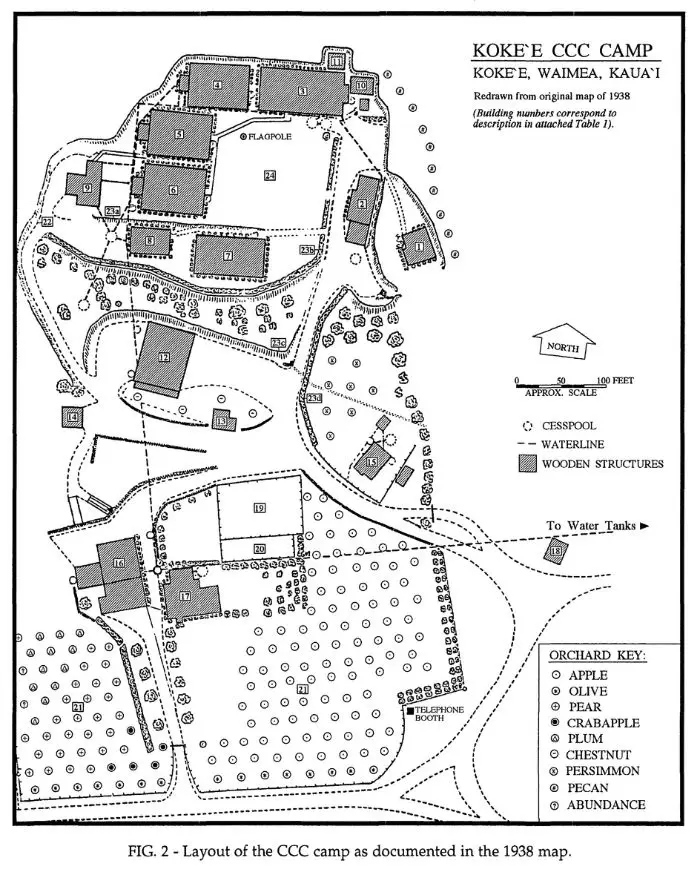
While most of the 1,300+ CCC camps across Hawaiʻi and the U.S. have disappeared, this 11-building historic site in Kōkeʻe State Park stands as a preserved monument to conservation and community.
The Beginnings Of Our Camp
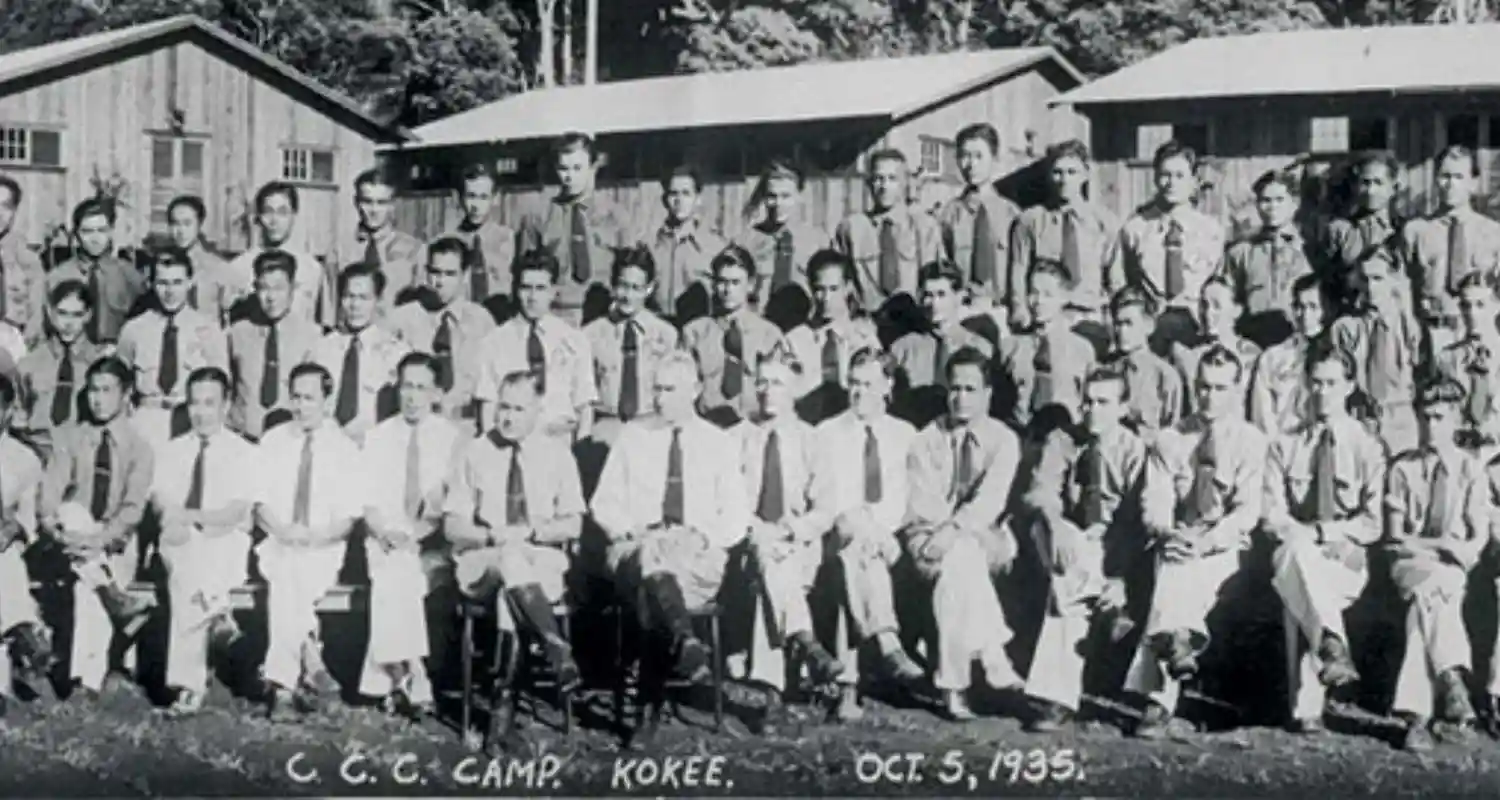
Built in 1935, the Kōkeʻe Civilian Conservation Corps Camp is one of the most intact CCC camps in the nation, preserving a powerful story of restoration and resilience. New Text
The Civilian Conservation Corps
Restoring Kaua’i’s Forest
The Kōkeʻe CCC Camp housed young men aged 17 to 28 between 1935 and 1942. Their mission was to restore the land by planting trees for watershed retention and improving park infrastructure. These efforts were critical after decades of destruction caused by a major fire in 1887 and overgrazing by cattle and feral goats.
The corpsmen built many of the trails still in use today, including the Alaka‘i Swamp Trail and Hā‘ena-Kalalau Trail. They also created remote roads to access planting areas, many of which now serve as fire access roads. A satellite camp at Waialae was also constructed, parts of which remain in use today.
Boosting Conservation Efforts
The CCC gave the Territory’s Board of Agriculture and Forestry a much-needed boost in managing forests and conserving natural resources on Kaua‘i, leaving a lasting impact on the island’s environment.
World War II and the Camp’s Military Role
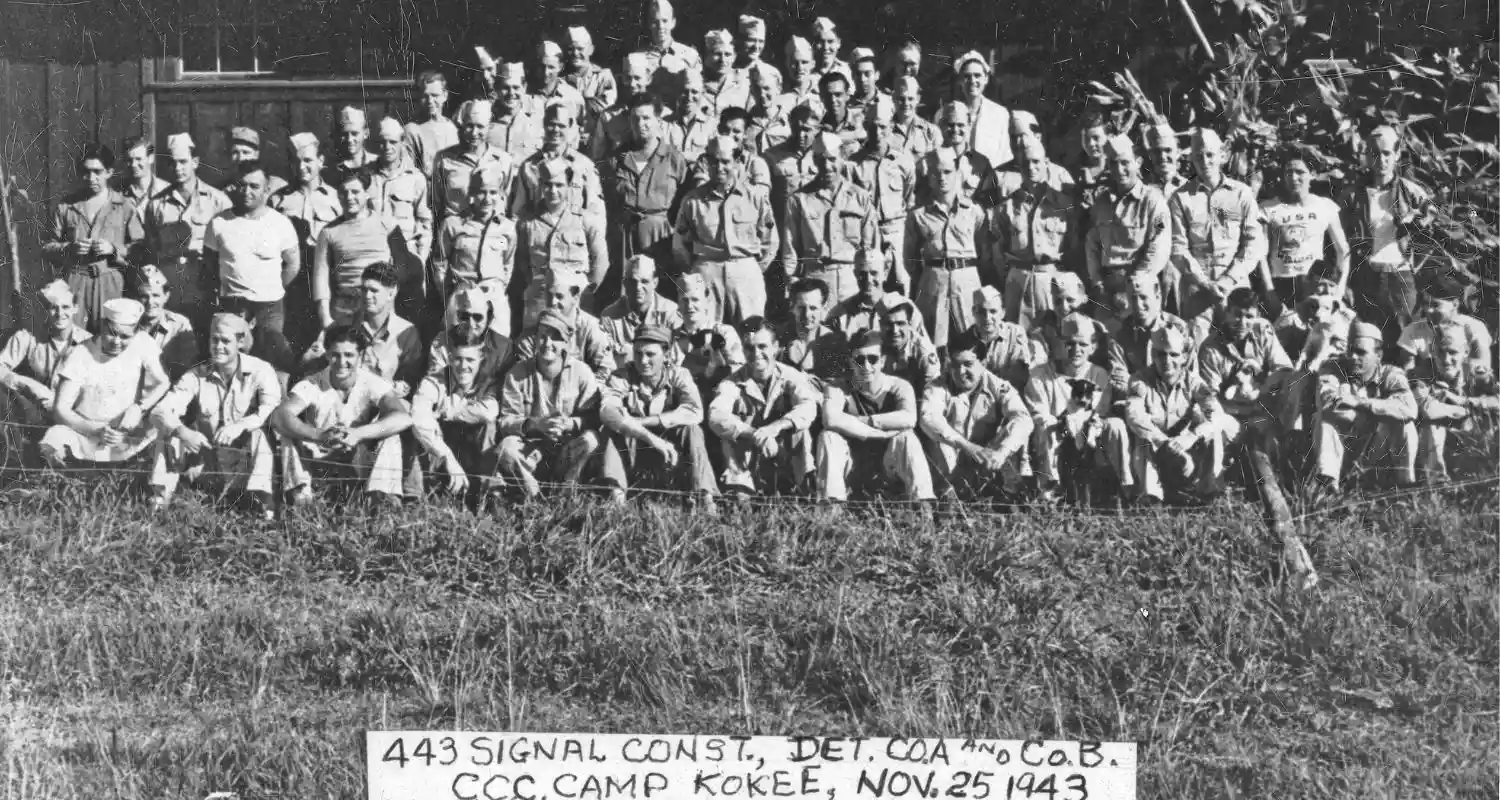
In 1943, the camp was repurposed as headquarters for the 443rd Aviation & Construction Battalion during World War II. The battalion’s mission was to build an alternate communications line through the Alaka‘i Swamp to Wainiha. To achieve this, they bulldozed the plantation ditch trail to Mōhīhī, transforming it into a road that remains in use.
1946-1982
Post-War Use and Abandonment
After World War II, the camp was used by the Air National Guard and other military groups until they built their own facilities. From 1946 to 1966, community groups, churches, and service organizations occasionally used the camp.
In the 1960s and 1970s, federal programs utilized the camp, including the Jobs Corps (until 1973) and the Youth Conservation Corps. However, as these programs ended, regular use of the camp dwindled.
When Hurricane Iwa struck Kauaʻi in 1982, it destroyed the camp’s recreation hall and left the site abandoned. Over time, the remaining buildings deteriorated, and the once-vibrant camp became overgrown and neglected.
1946-1982
Restoration and Revitalization
The Camps Repurpose
By 1990, the historic camp was in dire condition: windows were broken, blackberry brambles had engulfed the buildings, and hunters had begun using the site for shelter. Yet Hui o Laka saw the camp’s potential. The organization needed office space, volunteer accommodations, and a place for visiting researchers to stay overnight—and the abandoned camp offered the perfect solution.
Joseph M. Souza
On January 5, 1990, Hui o Laka submitted its first grant request to the Hawai‘i State Legislature to begin renovations. The camp was renamed in honor of Joseph M. Souza, Jr., a former Kōkeʻe forest ranger and co-founder of Hui o Laka, who had also served as Hawaiʻi State Parks director from 1964 to 1978. Souza passed away shortly after hearing about the restoration plans, unaware the camp would be named in his honor.
Planning A Retreat?
Our historic camp is a perfect place to unplug, unwind, and collaborate with others. Whether you are another organization or company – we invite you to join us on a wonderful and peaceful retreat.
Reparation
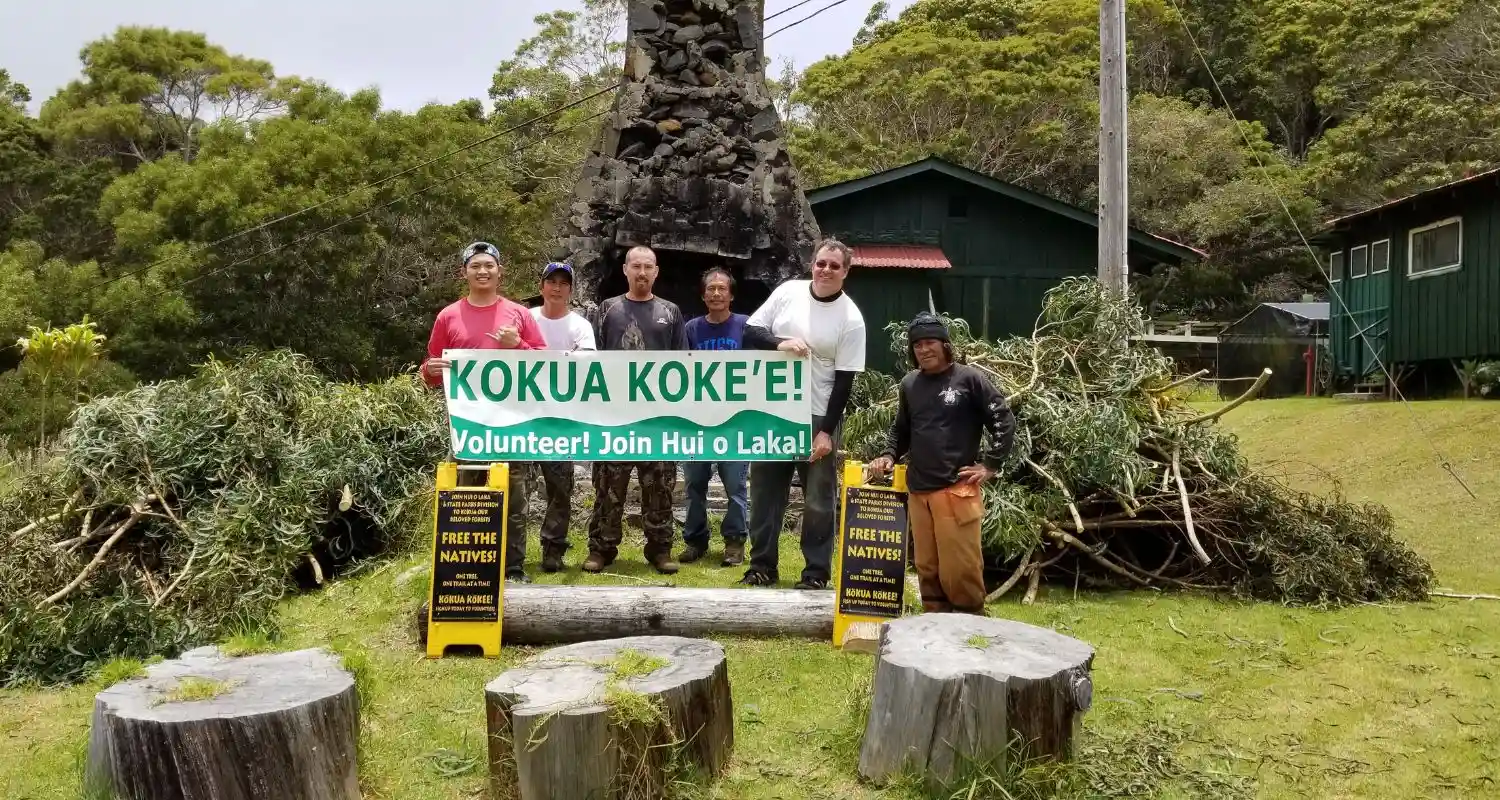
The renovations, which spanned nearly two decades, relied heavily on volunteer labor and contributions from Hui o Laka members. Teams worked tirelessly to repair the buildings, remove brambles, and restore the site to its former glory.
National Historic Landmark
In 1996, the Kōkeʻe CCC Camp was officially designated as a Hawaiʻi State and National Historic Landmark. Today, restoration efforts continue, and the camp serves as a hub for education and conservation. It can accommodate up to 50 overnight visitors, providing a unique experience for volunteers, researchers, and visitors to connect with Kōkeʻe’s rich history.
Explore Our Hui O Laka
Visit Our Historic Museum
Learn about the cultural and natural history of Koke’e through our museum.
Check Out Our Visitors Guide
Make your trip to Koke’e easier with resources on camping, hiking, and exploring.